The scent of lemon disinfectant mixed with the faint sourness of old bodies. It slipped under the door and spread through the room. From the other side of the wall, the hiss of an oxygen tank bled through, loud and steady.
George sat at a square table by the window. A beige placemat lay in front of him. On it, a birthday card with bright red balloons stood upright. Inside, the message was printed in bright ink.
Happy Birthday, Grandpa!
—The whole family.
P.S. Can’t wait to see you for Christmas.
The holidays were still nine months away.
He exhaled through his nose and looked at the liver-spotted hand resting on his thigh. The skin had gone thin, stretched tight like paper. He turned it slightly. His wedding band was still there, dulled with time, clinging to swollen knuckles.
It had outlived the woman who gave it meaning.
He missed her.
Out the narrow window, beyond a trimmed strip of lawn, the hill dropped into a stand of black pines. The trunks were packed tight. Their branches shut out most of the light.
A knock broke the quiet.
“George, wanna go for a walk?”
It was Miles, his neighbor. The tone was the kind you’d use to call a mutt.
George didn’t answer. He kept his eyes on the trees.
They walked the loop around the community grounds. Quiet shoes on concrete. They passed an idling ambulance, a patient being loaded from a room to a stretcher. A van door slammed as a nurse helped someone inside. Further on, another vehicle waited for a clinic run.
Miles talked the whole time. About elections. About how the wrong people always won. How everything was sliding sideways. Kids didn’t know what it took anymore, he said. No spine. No grit.
George stopped. Watched him.
Miles kept walking like he hadn’t noticed. His white hair was trimmed short, neat. He was still tall, still wiry. Like he might’ve been fast once. His eyes were pale and a little sunken at the edges.
“Come on, George.”
“I’m not a fucking dog, Miles.”
“Ah, hell. You in one of those moods again?” Miles waved it off like he was swatting at a fly. “Come on. I know what’ll fix it. Let’s go see the girls.”
Milly and Virginia lived in the wing near the pool, the one with a view of the city.
Milly wore a feather boa around her shoulders. A gardenia drooped above one ear. Powder clung to her cheekbones, dry and uneven. When the stereo clicked on, she moved. Her hips shifted slow at first, like she was trying to remember the rhythm.
Virginia wore thin silk tops tucked into bone-colored trousers. Her silver hair was cut blunt at the shoulders. Her skin stayed bare, untouched by makeup, as if anything added would throw it off balance.
She reached for George’s hand and led him down the short hallway to her bedroom.
George couldn’t thrust the way he used to. His back caught when he pushed too hard, but he stayed with it. After a while, Virginia shifted beneath him and climbed on top. Her camisole slipped from one shoulder, the sleeves cut just above the elbow.
His hands held the curve of her hips. Hers moved across his chest, then traced the soft skin at his neck. She found a steady rhythm. His fingers tensed and held. A soft sound escaped her mouth, quick and half-formed. Then she rolled off, catching her breath.
George lay still. His heart was racing, then slowing.
From the other room, the bed creaked. Milly and Miles were laughing.
Virginia stayed beside him, chest rising. Her cheeks were flushed. She turned her head to him. Still beautiful. Smooth skin. Fine lines around the corners of her eyes
“Clap’s going around,” she said.
“I heard. I don’t have it. Miles did though. Think he doesn’t anymore.”
“I know you don’t, George,” she said, “You gotta get around to get it.”
“Hmm.”
“Were you always like that, a one-woman kind?”
“I guess.”
“Like pulling teeth with you, George.”
He looked over at her. Grey hairs stuck to her temple with sweat. He thought about things he shouldn’t. Her eyes found his. She smiled, lips pulled wide.
“You miss yours?”
Virginia looked up at the ceiling. Her smile slipped. “You miss Marie?”
George didn’t answer right away. “She was better with the kids than I was. They liked her more.”
“They love you too.”
“They don’t. But that’s fine. I never liked them much anyway.”
“What a thing to say, George. About your own kids.”
“They’re fuckups. All three. One can’t hold a job. Lives off disability, but there’s nothing wrong with him. The other one got arrested for…I won’t say what. I don’t care that he doesn’t come around. And the last one’s a junkie. Says he’s clean now, but I don’t buy it.
Virginia propped herself up on one elbow and looked at him as he spoke.
“I used to think it was on me. That maybe Marie and I screwed up somehow. But then I remember my old man was a mean drunk. Hit my mother when she tried to leave. I never laid a hand on Marie. Never drank. I worked. Bought a house. Took her places—camping trips, beach vacations. Did little league, boy scouts. I did everything different.”
He rolled to his side to face her. “So what did those boys learn?”
Virginia sat quiet for a moment. “I don’t know why kids turn out the way they do. You can raise them right, or you can raise them awful. They still end up who they are. All you can do is love them. That’s the job.”
“Marie used to say that.”
“She was right.”
“Maybe that’s why they turned out like that. I never loved them unconditionally.”
“I think you did. Or you do. Otherwise, you wouldn’t still be carrying it. It’s hard, admitting our kids turned into people we don’t like. But that’s on them.”
George looked over at her. “Yeah.”
At dusk, George sat in one of the wooden rocking chairs on the front porch. It was meant to feel like home, to make them believe they lived in one, not just stayed in one. The forest beyond was thick and dark. The sun had dropped behind the mountains, but a flat light still hung in the sky.
He stared into the black forest, into its thickness, unsure of what he was looking for. A prickle ran up his neck. Something in the dark felt fixed on him, as if a presence held still among the trees.
He pushed his hands into his knees and stood. Something cracked in his back. He stepped off the porch and walked into the trees.
A few years later…
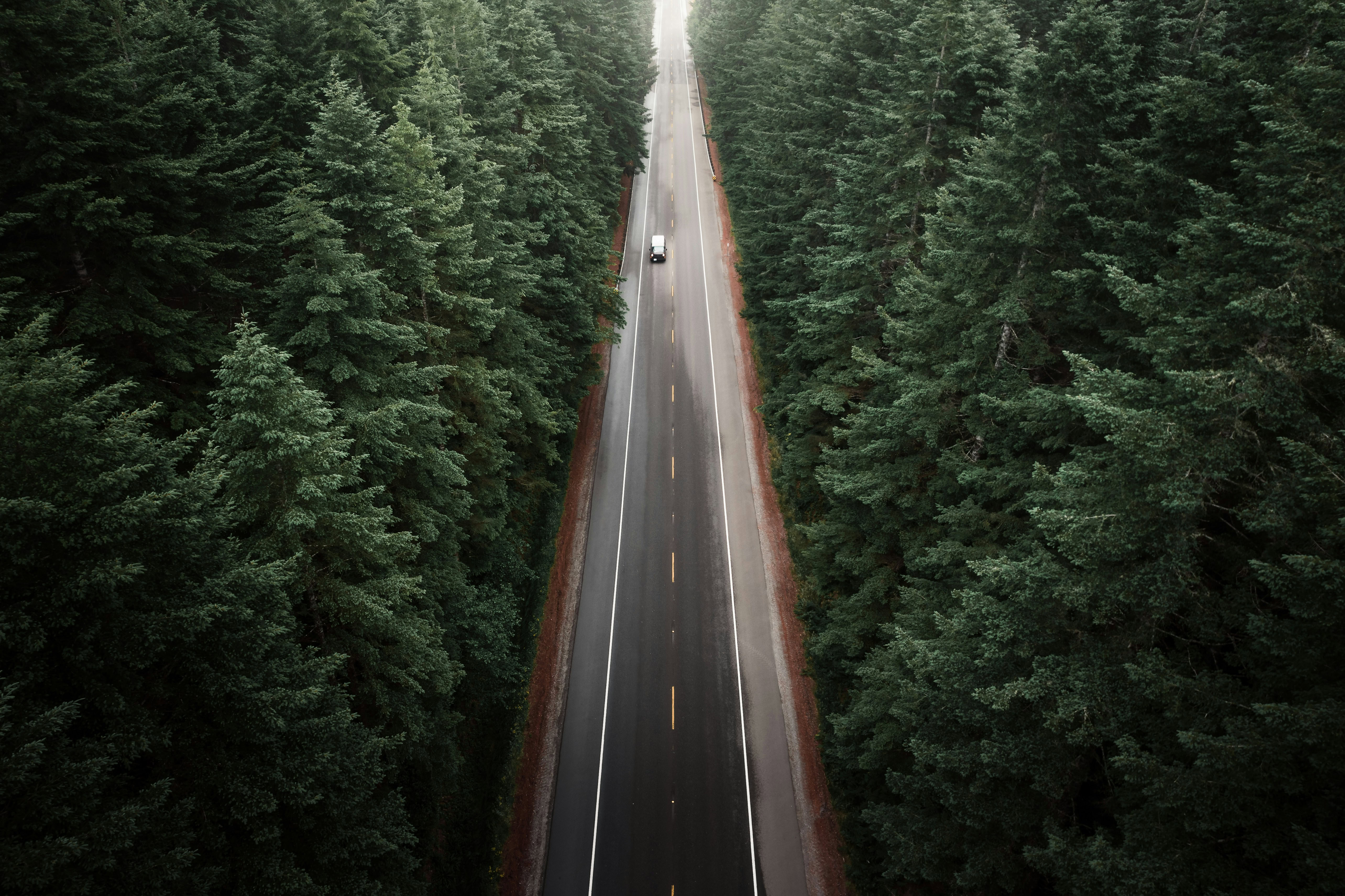
A family of four drove down a long stretch of highway in a new SUV. Camping gear was strapped to the roof, tied down with clean, bright cord. The father adjusted his grip on the wheel. His wedding band tapped softly against the steering column.
“Stop it!” a girl yelled from the back seat.
The father glanced in the rearview mirror. His teenage son was poking at his younger sister, just out of sight behind his shoulder.
“I said stop it!” she yelled again, louder this time.
“Tommy, quit it.”
“I didn’t do anything.”
“I saw you. Don’t lie to me.”
“Thomas, leave him be,” his wife said.
She turned in her seat. “Why don’t you both watch a movie on your tablets?”
The kids pulled on their headphones.
“You shouldn’t let him get away with lying like that,” Thomas said. “He’s too old to still be lying like that.”
“It’s harmless, Thomas.”
“It’s not, it’ll snowball.”
“Oh stop it, you’re too hard on him,” she said, flipping through her phone and tapping on a podcast.
From the speakers, a young woman’s voice spilled out, bright and sugary.
“This one’s a real heartbreaker, Brit. No one knows what happened exactly, but residents at Hayden Villa Retirement Home said George Mills was quiet. Polite, but he had his moods.”
“Well, that’s normal when you get old,” Brit said.
“Right. So, one evening he doesn’t show up for dinner. Staff look around, can’t find him. They check the surveillance footage. It shows George standing on the porch, just looking out, and then walking off into the woods behind the property.”
“They called the police?”
“Yeah. A search followed. Footsteps led into the forest, but then nothing. The trail just ended.”
“No body?”
“No. His sons, well only two of his sons spoke to the press, but they gave interviews pleading for the public’s help. One of the sons mentioned their dad never really got over losing their mom. Called her the heart of the family. Said after she passed, he just got quiet. Pulled back.”
“So what happened with the search?” said Brit.
“Police called off the search after twelve days. Said he wouldn’t have survived the cold, and it was too risky sending more people into the forest.”
“That’s so sad,” said the wife.
“I don’t know, I’d prefer that to living in home,” said Thomas.
His wife didn’t answer. She turned back to the window. The trees blurred by.

Leave a Reply